
Clear Home, Clear Mind: How Decluttering Can Improve Your Mental Health
- Jordan Brackett
- Jan 15
- 5 min read

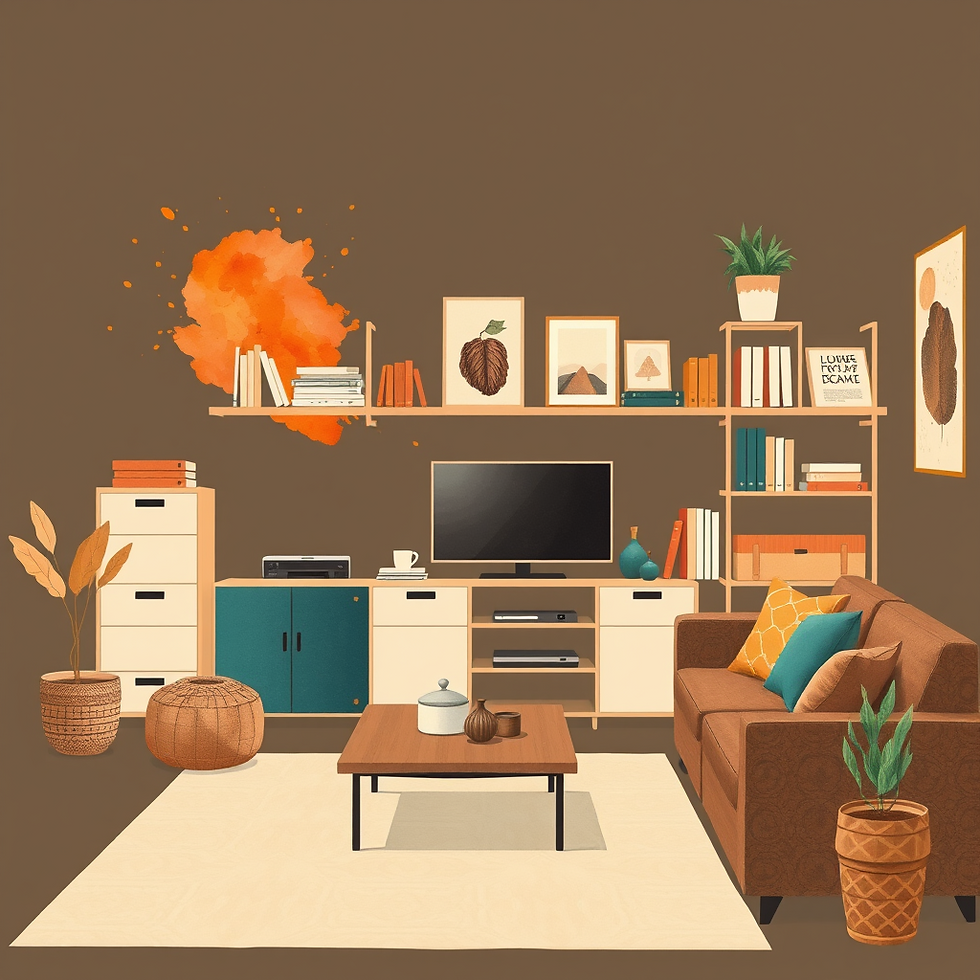
Howdy and welcome back! Today we're diving into a topic that, honestly, I probably need to pay more attention to myself: the connection between a clear home and a clear mind. You know the saying, "Your home reflects your head"? Well, if that's true, my head is a beautifully chaotic, craft-supply-filled, book-stacked, half-renovated, constantly-in-progress kind of place. But hey, at least it's a sanctuary, right?
As a recovering perfectionist with multiple irons in the fire at all times (and let's just say whatever ADD-like tendencies run rampant in my family), the idea of a perfectly decluttered home can feel as intimidating as, well, confessing to a booger on a freshly painted wall when you're four years old. But just like I eventually learned to own up to my actions (after a few spankings, bless my dad's heart), I've also learned that a little bit of effort in decluttering can go a long, long way.
The Emotional Weight of Clutter
Let’s be real for a minute. That pile of clothes that’s been sitting on "the chair" for a week (or a month… or longer, no judgment here!)? The stack of mail that’s threatening to avalanche off the counter? Those forgotten craft projects lurking in the corner? They’re not just physical objects, are they? They carry an emotional weight. For me, they can feel like little nagging reminders of unfinished tasks, of things I should be doing, of commitments I haven't quite met. It’s like a constant, low-level hum of "you're not quite on top of things," and for a recovering people-pleaser and perfectionist like myself, that hum can get LOUD.
Think about it. Every time you walk past that cluttered corner, your brain registers it. Even if you're not consciously thinking about it, there's a subtle drain on your mental energy. It's like having a dozen open tabs on your computer – eventually, it slows everything down. Our homes should be places of rest and rejuvenation. When they’re filled with visual noise, it's hard for our minds to truly switch off. It's a lesson I’m still learning, but one that’s becoming increasingly clear: a clear space creates capacity for calm.
Easy-Entry Decluttering Methods: Just Start Somewhere!
Now, before you start hyperventilating about having to overhaul your entire house (I know, I know, the competitive side of me wants to just tackle it all at once and beat it into submission!), let’s talk about some easy-entry methods. Because, as my wise parents probably learned after painting an entire 100-year-old farmhouse with four rugrats underfoot, you gotta break it down!
My favorite approach is the "10-Minute Zone." Pick one small area – seriously, just one. Maybe it’s that overflowing junk drawer that’s practically a black hole of forgotten pens and random keys. Maybe it’s a section of your kitchen counter. Set a timer for just 10 minutes. In those 10 minutes, you’re not allowed to get distracted, you’re not allowed to pull everything out and make a bigger mess (which is my natural inclination, sigh). You’re just going to focus on that one tiny zone. Throw away obvious trash. Put things back where they belong. If something doesn’t have a home, make a quick decision: keep, donate, or trash. Just 10 minutes! You’d be amazed at what you can accomplish.
Another good one is the "One Drawer Challenge." Pick one drawer. Any drawer. Could be your sock drawer, your utensil drawer, that mysterious drawer in your bathroom that holds all the things. Pull everything out. Sort it. Keep what you need, get rid of what you don’t. Give it a quick wipe down. Put back only the essentials, neatly. It’s a small victory, but trust me, those small victories build momentum. For someone who loves to see improvement week over week, like doing more reps or more weight at the gym,, this kind of incremental progress scratches that itch perfectly.
The longer you put it off, the bigger the "mess" feels, and the more mental stress you give yourself. Just start with the booger! I mean the junk drawer. Same difference, right?
How to Reset Spaces Weekly
Now, once you’ve done a little decluttering, how do you keep it from reverting to its former chaotic glory? Weekly resets are your new best friend. This isn't about deep cleaning or reorganizing everything. This is about tidying up and getting things back to a baseline.
Think of it like this: every Sunday (or whatever day works for you), dedicate 30-60 minutes to "resetting" your main living areas. This means:
Put things away: Any items that have migrated from their homes (dishes, books, remotes, crafting supplies – oh, the crafting supplies!) get put back.
Clear flat surfaces: Tables, countertops, desks. Clear them off! Wipe them down. You'll be amazed at how much lighter a room feels with clear surfaces.
Fluff and straighten: Arrange pillows, fold blankets, straighten rugs. These small acts make a huge difference in the overall feel of a room.
Empty small trash cans: It’s a quick task, but it makes a big impact.
This weekly reset is a non-negotiable for me now, especially with my tendency to have 20 things going in every area of my life at all times. It’s a chance to hit refresh before the new week begins, and it allows me to start Monday feeling a little more in control, a little less overwhelmed. It’s like a mini-declaration of "I'm taking responsibility for my space, and thus, for my peace of mind."
Maintenance Through Habit, Not Overhaul
The key to long-term success in decluttering (and in life, really!) is maintenance through habit, not through infrequent, massive overhauls. Think about it: I learned through a short stint with a personal trainer all about weight training. It’s not about one huge workout; it’s about consistent, week-over-week effort. Same with your home.
Here are a few habits that can make a world of difference:
The "One-Touch" Rule: When you bring something into your home, try to only touch it once. Don't set it down "for now." Put it where it belongs immediately. Mail comes in? Open it, deal with it (trash, file, or action), and put it away. Clothes off your body? Either put them in the laundry or back in the closet.
Daily "Power Pick-Up": Before bed, spend 5-10 minutes walking through your main living areas and putting things away. It’s incredible how much a few minutes can accomplish, and you wake up to a tidier space, which automatically sets a more peaceful tone for your day.
The "One In, One Out" Rule: Especially for things you accumulate, like books (guilty!!), clothes, or crafting supplies. When you buy something new, commit to getting rid of something similar. New shirt comes in, an old shirt goes out. It keeps the flow going and prevents accumulation.
These habits are not about being perfect but about creating systems that support a less cluttered life. It’s about building those small muscles, those consistent efforts, that lead to a stronger, clearer mental state.
A Clear Space Creates Capacity for Calm.
So, there you have it. From a child who once smeared a booger on a freshly painted wall, to someone who now (mostly) values a clear space, I can tell you that the journey is worth it. I’m on the journey to learn to take responsibility for my physical space.
A cluttered home can feel like a constant to-do list, a visual representation of overwhelm. But by implementing small, manageable decluttering methods, consistently resetting your spaces, and building positive habits, you’re not just tidying up your house. You’re tidying up your mind. You’re creating capacity. Capacity for calm, for creativity, for focus, and for truly enjoying your beautiful oasis.
It’s never too late to learn, and it’s never too late to start. So go forth, tackle that drawer, reset that living room, and watch how a clear home can truly lead to a clearer, calmer mind. Welcome to my world, and welcome to a little more peace in yours.
Have these tips worked for you? What other ways have you found to reclaim some calm in the chaos?


Comments